
Thursday, August 4, 2011
Eating Locally
This year, for the first time, our lettuce is growing pretty well. Last year I grew green leaf lettuce and a mesculun mix and it was a horrible failure because everything bolted so quickly. This year, I'm growing buttercrunch lettuce, and I'm really loving how it's pretty heat tolerable. I've been harvesting the outer leaves to use in sandwiches. My favorite is a BLT, a Bacon, Lettuce and "Toast" sandwich. It was delicious. I wish the tomatoes were ripe so I could add it to the sandwich. Soon, very soon. The bacon in the sandwich is from the hub's parent's farm, Heritage Homestead of Depeyster, NY. We are down to our last 4 packages of bacon, and this makes me incredibly sad. It's the best bacon I've ever eaten. Ever. I wish I had more time to bake bread. It would really make this sandwich! Eating like this makes me realize that you really can eat locally even in an urban environment. I would love to challenge myself to eat locally for a month, like other bloggers have done... I'm pretty scared to do so, since our garden isn't as productive as other garden bloggers I follow. Maybe next year, since I'll have 2 years of gardening under my belt. I'm starting to understand what works and doesn't in our garden, so I think next year will be our most productive. Something to look forward to.


I'm So Jealous
I've tried many attempts to grow hydrangeas in my yard, but I've always netted dismal results. Back in April, I received 2 small hydrangea plants from a contest win from Santa Rosa Gardens. I planted the 2 hydrangeas, a Nikko Blue variety and an Annabelle white one, in hopes that they will take off. For some reason, this is one of those plants that I have such a hard time keeping alive. I know they like moist soil, so I'll try to keep them moist. Also as an experiment, I planted one in partial shade and the other in full sun just to see which plant does better with the different amounts of sun / shade. In the past, I have planted hydrangeas in full sun, and they didn't survive. But so far, to my surprise the Annabelle hydrangea which is in full sun is doing really well. It has more than doubled in size.
 The Nikko Belle hydrangea, I planted in a shady area of the front yard. It too is doing pretty well and has 2 blooms on it. I'm really hoping that these plants take off. I love mophead hydrangeas, they are definitely one of my favorites.
 These are the hydrangeas growing at my parent's house in their side yard. All of these were planted as 6 inch pots years ago. They sit in partial shade. Look at them now! They are huge and super healthy. I absolutely love the color. I am so jealous! I hope my hydrangea will grow like this.
Check out this Nikko Blue. I love the color. Do you grow hydrangeas? What's your secret to growing lush healthy hydrangeas?


Check out this Nikko Blue. I love the color. Do you grow hydrangeas? What's your secret to growing lush healthy hydrangeas?

Wednesday, August 3, 2011
I Grew a Mutant Cucumber!
Cucumbers are coming in at a steady rate now. I'm picking about one cucumber every other day. I've been using the cucumbers in sandwiches, I should save them until I have enough cucumbers to make Sweet Dill Pickles!
 In the midst of the cucumber vine, I did find a weirdly shaped discolored cucumber. Check out the one on the left. It looks like such a mutant! Not only is it an orangey color, it's round!! It came off the same vine as the one on the right. I did a Google search on why cucumbers turn this orangey color, and the search revealed that cucumbers turn this color when they are on the vine too long and over ripe. They are still edible despite the weird color but they might taste bitter. I tasted the orange cucumber and it tasted just fine. It wasn't bitter at all, so it went into my sandwich for lunch.


Tuesday, August 2, 2011
It Turned into a Different Kind of Talk
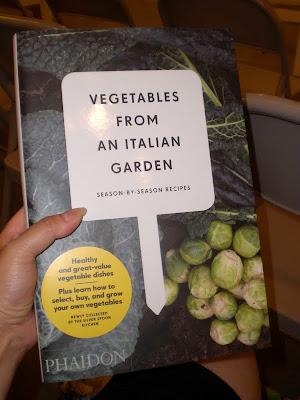
Last week, after a day of marathon business meetings, I headed to Soho to catch a talk hosted by Phaidon Press to promote a new book they published called, "Vegetables From an Italian Garden". The panel discussion was supposed to be based around the topic of "Growing Your Own Produce in Urban Environment", so I was pretty excited about it. The press release said the talk would include a panel discussion on urban farming and sustainable agricultural practices. I went to the discussion thinking that I would come away from the talk with some interesting tips and advice on growing produce in an urban environment like NYC.
 Participating in the panel discussion were the following folks, from left to right, Michael Grady Robertson (former Director of Agriculture for the Queens County Farm Museum, currently the owner of Grady’s Farm), the Moderator (Bad on me, I can't remember the name of the moderator of the discussion), Ian Cheney (co-creator of the documentary film King Corn and Truck Farm), and Eric Demby (Brooklyn Flea and Smorgasburg).
 My favorite speaker on the panel was Ian Cheney. He showed us a slideshow of images, among them were a "Truck Farm" he created. I wouldn't call it a farm, it's more of a mobile garden. He created a garden in the bed of a pickup truck. He explained that he came up with this idea when he moved to Brooklyn and lacked any space to grow fresh produce, so he had this idea of converting an old truck given to him by his grandfather, into a garden plot. He retrofitted the back of the truck by drilling drainage holes and added a lightweight soil mixture to grow the plants.
 The Truck Farm became the subject of a documentary, and quickly became a traveling exhibition for educating urban youths about gardening and farming. The garden in the truck bed idea spread and now there are 25 fleets of mobile gardens around the country. What a cool idea for getting the word out about growing your own fresh produce! Ian admitted that growing produce this way isn't going to produce high yields, and isn't very practical for the everyday urban gardener. However, it's become a great learning tool to teach others about where your food comes from. As an educational tool for demonstrating the process of seed to edible plant to urban youth who don't normally have access to farms or gardens, it's pretty darn amazing.
 I must say however that the rest of the panel discussion was a bit of a disappointment because it wasn't what I expected. I thought it would be a dialogue mostly about urban farming practices, but it quickly became a discussion about Food Justice and the importance of buying local and organic. Michael of Grady's Farm talked about the hardships of running an independent farm. He practices organic farming but said that the farm is not profitable because of the high costs of organic feed, the costs to run the farm, and the property taxes on the farmland, he is lucky to break even. He talked about selling his organic eggs at $6 - $8 a dozen. I'm all for buying locally and organic, but at that cost, who can afford to eat organic? In my mind, its not affordable to all, and therefore very elitist. My in-laws also own an independent farm and they too practice organic methods, but where they are located, selling eggs at that price is out of the question, not only because where they live no one would buy eggs at that cost. But also, they believe that healthy food shouldn't have to come at a high cost. Which led me to make a statement and ask a question to the panel discussion. I told the group that I felt that we as a society had to do more to level the playing field for independent organic farmers. In my opinion, the public needs to be more vocal about demanding safe farm raised food. We need to demand livestock that is raised ethically and produce that is safe and void of toxic pesticides and is non-GMO. There should be more government subsidies for the independent farmer to offset the high costs of farming organically. It's difficult for these farmers to compete with the larger farm conglomerates. Do we have to sacrifice food safety because it is cheaper? I think as a society, we should demand that our produce and livestock be safe to eat. Since buying organic isn't as affordable as I would like it to be, (I can't afford to buy organic with those prices) I'll continue to maintain a backyard garden and grow my own organic fruit and vegetables. I want to be able to have access to healthy food, even if that means I have to grow my own.
 I realize that I am pretty lucky in the fact that I have the yard space to have such an extensive garden despite living in an urban environment. And that not many urbanites have this luxury. However, even if I didn't have this space, I would have to seek out ways to have a garden like in a community plot or do container gardening. What's your take on this issue?


Subscribe to:
Posts (Atom)
